Sunday, January 22, 2012
AAFIA SIDDIQUI CONTRACTS CANCER IN US JAIL

Wednesday, January 18, 2012
SOPA, PIPA: What you need to know
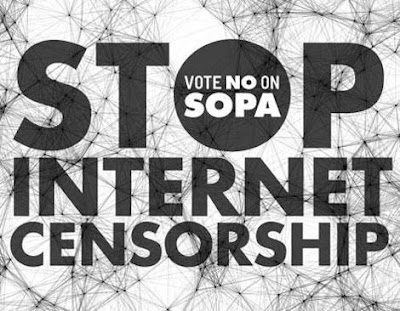
Having trouble using Wikipedia today? That's because the popular crowd-sourced online encyclopedia is participating in an "Internet blackout" in protest of two controversial anti-piracy bills: The Stop Online Piracy Act (SOPA ) and its Senate companion, the Protect IP Act (PIPA ).
Pictures: Websites go dark to protest SOPA
The bills are intended to strengthen protections against copyright infringement and intellectual property theft, but Internet advocates say they would stifle expression on the World Wide Web. In essence, the legislation has pitted content providers -- like the music and film industries -- against Silicon Valley.
"It's not a battle of left versus right," said progressive activist Adam Green, whose organization Progressive Change Campaign Committee on Tuesday hosted a press conference with opponents of the bills. "Frankly, it's a battle of old versus new."
Here's a basic look at the actions taking place today and the legislation causing all the fuss.
What's going on today?
The popular link-sharing site Reddit got the ball rolling for today's 24-hour Internet blackout. In addition to Reddit and Wikipedia, other sites participating include BoingBoing, Mozilla, WordPress, TwitPic, MoveOn.org and the ICanHasCheezBurger network. Search giant Google is showing its solidarity with a protest doodle and message: "Tell Congress: Please don't censor the web," but the site planned no complete blackout.
Other sites -- like Facebook and Twitter -- oppose the legislation in question but aren't participating in today's blackout.
In addition to the Internet-based protests, some opponents are physically protesting on Wednesday outside of their congressional representatives' offices. Reddit co-founder Alexis Ohanian said in Tuesday's press conference it will "probably be the geekiest, most rational protest ever."
What does the legislation do?
There are already laws that protect copyrighted material, including the Digital Millennium Copyright Act (DMCA). But while the DMCA focuses on removing specific, unauthorized content from the Internet, SOPA and PIPA instead target the platform -- that is, the site hosting the unauthorized content.
The bills would give the Justice Department the power to go after foreign websites willfully committing or facilitating intellectual property theft -- "rogue" sites like The Pirate Bay. The government would be able to force U.S.-based companies, like Internet service providers, credit card companies and online advertisers, to cut off ties with those sites.
Why content providers want SOPA and PIPA
Content groups like the Motion Picture Association of America (MPAA), and business representatives like the U.S. Chamber of Commerce, argue that innovation and jobs in content-creating industries are threatened by growing Internet piracy. Overseas websites, they argue, are a safe haven for Internet pirates profiting off their content.
According to the Global Intellectual Property Center, which is part of the U.S. Chamber of Commerce, intellectual property-intensive sectors employ more than 19 million people in the U.S. and create $7.7 trillion in gross output. Foreign website operators currently outside the bounds of U.S. law; SOPA and PIPA would help quell illegitimate Internet activity.
In a statement , former Sen. Chris Dodd, who is now chairman and CEO of the MPAA, called the blackout day a "gimmick."
"It's a dangerous and troubling development when the platforms that serve as gateways to information intentionally skew the facts to incite their users in order to further their corporate interests," Dodd said.
CBS Corporation, which owns CBSNews.com, is a member of the Copyright Alliance -- an industry group representing content producers that supports SOPA and PIPA.
Why Internet companies oppose SOPA and PIPA
Internet companies and their investors would readily say that they're holding the "blackout" to protect their corporate interests -- and the entire burgeoning Internet-based economy.
"The success of Reddit... is one of the smaller examples of the success that has happened in our industry -- and will continue to unless bills like SOPA or PIPA become law," Ohanian said Tuesday.
Under the rules SOPA or PIPA would impose, Ohanian and others argue, start ups wouldn't be able to handle the costs that come with defending their sites against possible violations. Such sites would not be able to pay the large teams of lawyers that established sites like Google or Facebook can afford.
The legislation in question targets foreign companies whose primary purpose is to sell stolen or counterfeit goods -- but opponents say domestic companies could still be held liable for linking to their content. While sites like Reddit wouldn't have a legal duty to monitor their sites all the time, "you might have your pants sued off of you" if you don't, said Jayme White, staff director for the Senate Finance Subcommittee on international trade.
Brad Burnham, managing partner at the venture capital fund Union Square Ventures, said his company has avoided investing in companies related to the music industry because of the copyright risks -- but under the proposed legislation, that risk would hit just about any Internet company. SOPA and PIPA, he said, "takes the risk of frivolous litigation... to the entire Internet."
That should be a concern, Burnham said, when the Internet accounts for 21 percent of economic growth among developed nations, according to one study .
The impacts could go beyond the economy, some argue. Rebecca MacKinnon, a senior fellow at the nonpartisan New America Foundation, argues that if blogging platforms are motivated to monitor their content, that could have "a tremendous chilling effect on people tyring to conduct political discourse and trying to use content in a fair use context."
Where does the legislation stand?
Opponents of SOPA and PIPA celebrated when, earlier this month, authors of both bills decided to set aside the most controversial aspect of them -- language that would have let the Justice Department force Internet Service Providers to block the domains of suspected foreign "rogue" sites. Also, over the weekend, the White House suggested it wants to see modifications to the legislation.
The Senate is scheduled to hold a procedural vote on PIPA on January 24.
House Judiciary Committee Chairman Lamar Smith, R-Texas, who sponsored SOPA, said Tuesday he expects the committee to continue work on the House bill in February.
Rep. Darrell Issa, R-Calif., meanwhile, is opposed to the legislation and will today officially introduce an alternative -- the Online Protection and Enforcement of Digital Trade (OPEN) Act. Issa said Tuesday he expects his bill to have more co-sponsors than SOPA has in the House and that "once members of Congress see a viable alternative... I think we can get to a consensus."
The OPEN Act would make the International Trade Commission, rather than the Justice Department, responsible for policing U.S. connections to foreign rogue sites. Placing that responsibility in the hands of one entity, rather than the whole court system, would make the process more transparent, Issa argues.
Tuesday, January 17, 2012
Inside A $1.5 Million Cave House
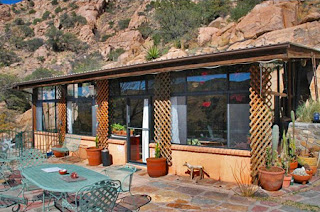
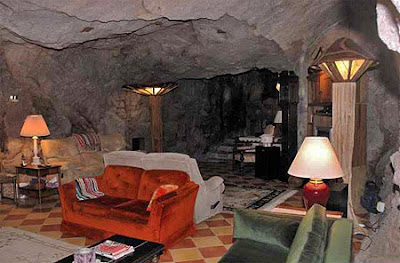
Inside A $1.5 Million Cave House.

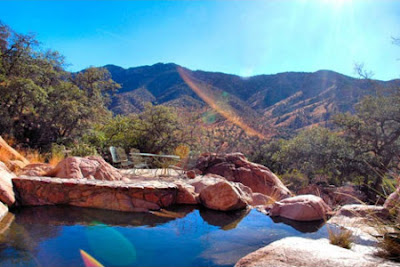
Locals refer to it as the Cave House and the nickname is apt. Sitting on 37 acres just outside of Bisbee, AZ, a mining town-turned-Baby Boomer retirement haven about 80 miles from Tucson, the Chulo Canyon Cave House is carved into an outcropping of granite boulder, extending more than 2,000-square feet into a desert grotto.


A BlackBerry handset is displayed in Washington.
TORONTO/SEOUL (Reuters) - Research In Motion is not onSamsung Electronics Co's immediate shopping list, but the ailing Blackberry maker may still be attractive to Asian smartphone makers looking to compete against Google's Android, the world's fastest growing mobile platform.
Samsung said on Wednesday it has no interest in buying RIM or licensing its operating system, refuting a tech blog report that Canada-based RIM was looking to sell itself to the South Korean technology giant.
Shares of RIM, which has long been the subject of takeover speculation with its stock valuation lingering at multi-year lows, jumped more than 10 percent on the blog report, but fell back after Samsung's denial.
Product delays and profit warnings have eroded confidence in RIM, once at the cutting edge of smartphone technology for business users, and its management.
But RIM, still valued at above $9 billion, may hold enough allure to interest Asian vendors like LG Electronics Inc, HTC and ZTE, which don't have their own platform, said a source at a major Asian handset maker.
"As we don't have our own platform, it's (RIM) an attractive option to look into and we're flexible about anything," said the source, who has direct knowledge of the matter, but who declined to be named as he is not authorized to talk to the media.
Samsung has its own platform called bada and is seeking to boost its presence by merging it with a platform backed by chipmaker Intel.
"We haven't considered acquiring the firm and are not interested in (buying RIM)," said Samsung spokesman James Chung, adding that Samsung had not been approached by the Canadian firm for a takeover and was not interested in licensing RIM's mobile platform.
The Boy Genius Report website cited an unidentified source as saying RIM co-Chief Executive Jim Balsillie was meeting with companies interested in either licensing its software or buying a part or all of RIM, with Samsung leading the pack.
After Samsung's denial, Nasdaq-listed RIM shares tumbled 5.3 percent to $16.55 in extended trading, after closing up 8 percent at a 6-week high of $17.47. The stock rose as much as 11.1 percent.
LICENSING DEAL?
Samsung may not be interested in buying RIM outright, but some analysts say that adding BlackBerry software may be a good fit with its strategy of bolstering software capability and adding corporate subscribers.
"We see RIM licensing BlackBerry 10 and charging $10 per device," Jefferies analyst Peter Misek said in a note, referring to RIM's operating system.
"Samsung and HTC would do this to gain access to RIM's subscriber base, diversify away from sole dependence on Android and create more enterprise exposure. BlackBerry 10 is effectively an Android derivative and, therefore, many bridges are possible."
Samsung has traditionally focused on growing its business from within and has no track record of major deals in recent years. In 2008, it withdrew a $5.9 billion unsolicited bid for flash memory card maker SanDisk due to the U.S. firm's deepening losses and uncertain outlook.
But it has since become more flexible on M&A as the hardware-focused firm seeks to boost its software capabilities to counter Apple and Google.
"It'd be helpful for Samsung or HTC to license BlackBerry OS so they can gain access to the corporate space," said Vincent Chen, an analyst at Yuanta Securities.
Shares in Samsung slid 1.1 percent in Seoul on Wednesday, underperforming the main KOSPI share index, which slipped 0.3 percent.
Jefferies' Misek said RIM could announce a deal within three months, and the appointment of a new chairperson could speed up the process. A spokesman for RIM declined to comment on the blog report.
Balsillie and fellow co-CEO Mike Lazaridis also share a role as board chairman, but, after pressure from investors, a committee made up of the rest of RIM's board is due to report this month on possible changes to the unusual structure.
RIM already turned down takeover overtures from Amazon.com Inc and other potential buyers because it prefers to fix its problems on its own, people with knowledge of the situation told Reuters recently.
RIM's shares have jumped nearly 40 percent since December 21, when Reuters reported such interest, but the stock is still down almost 75 percent from a year ago.
Monday, January 16, 2012
Lahore: Information Technology Park named as Arfa Kareem

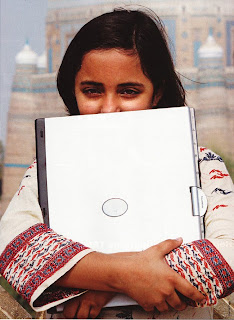
LAHORE - Arfa Kareem was laid to rest on Sunday in the graveyard of her village Raam Devali, near Faisalabad, leaving people saddened across the country. Earlier in the day, the funeral prayers of the deceased were offered at Khalid Mosque, Cavalary Ground. The funeral was attended by Punjab Chief Minister Shahbaz Sharif, a large number of political leaders, army officers and people from all walks of life. The dead body of the IT genius, wrapped in the national flag, was taken to Faisalabad, where scores of people attended the funeral prayers in D Ground. After the funeral prayers, the body was brought to Raam Devali through an ambulance for the burial. Many people, including the class fellows of Arfa, had gathered in her home, wishing to see her last sight. The demise of Arfa set off a wave of grief in the country and among her fans across the world. Prime Minster Yousaf Raza Gilani, President Asif Ali Zardari, chief ministers and governors of all provinces and other leaders paid tribute to her and offered their condolences to the bereaved family. Talking to reporters, Arfa’s father, Col Amjad Kareem Randhawa, said he was proud of his daughter, who would never die from the hearts of the people, which is why he was not grieved.

The two IT projects of the country, one in Lahore and another in Karachi, have been named after the child tech prodigy. Punjab Chief Minister Shahbaz Sharif announced to name the Lahore Information Technology Park after Arfa Kareem and that the parents of Arfa would be the chief guests of the laptop distribution ceremony amongst students. Similarly, Sindh IT Minister Mohammad Raza Haroon announced to dedicate the IT Media City in Karachi to Arfa’s memory. “The City shall be referred to as Arfa Karim IT Media City, Karachi,” said a statement.
Legendary lion tamers to premiere new show

The circus of the legendary Russian lion tamers, brothers Edgar and Askold Zapashny, are set to premiere their new epic show, "Camelot 2: the Envoy of the Gods."
The new show is in fact the second part of their previous project “Camelot”, which premiered two years ago and made big noise in show business. “Camelot 2” promises to be even more spectacular, featuring all manner of circus acts, including of course the brothers’ trademark tricks with lions and tigers. Edgar and Askold Zapashny will perform as two god-brothers, who send their envoy to Earth to establish peace there.
"This project was from the beginning thought to consist of several shows… And I assume, the spectators are waiting for the new show with anticipation, as almost all tickets are already sold out," the director and a scriptwriter of the show, Askold Zapashny, said at a media conference.
The Zapashny brothers come from a long line of animal tamers. And the latest generation, according Askold Zapashny, is not planning to stop any time soon. The Zapashny Brothers’ Circus is for today a unique Russian troupe that presents a new show every year. Askold Zapashny revealed the cost of the new show – about 9 million euro. More than 200 people are involved in it.
Four huge screens have also been installed in the circus for visitors not to miss a single detail of the show on two arenas. Acrobats soaring in the air, talking parrots, dogs walking on two paws, and lions and tigers following any command from their tamers. The brothers have shared that in the new show, the tamers will give the audience two rare white tigresses and an albino-lion from South Africa. All this will be accompanied by music, light and fireworks, to make the show an unforgettable event. Naturally the program is aimed at keeping the audience impressed the whole time.
The premiere will take place in the capital’s Luzhniki on Saturday. "Camelot 2" will run in Luzhniki till January 10. In total, Moscow will see 55 performances. After Moscow the circus will tour to St. Petersburg, with the premiere on March 18.
No veiled threat: ‘Destructive’ Barbie off Iranian shelves

The “B who U wanna B” American icon has outstayed her welcome, according to Reuters – and will be removed from every toy shop in Iran. The country has been toying with this idea of a ban since 1996, but only now has it become a reality.
Stories of American citizens getting into trouble in Iran have been rather frequent. Usually, they are somehow connected to politics and espionage – but that is not why one Barbie Millicent Roberts has become persona non grata in the Islamic republic.
No, Mattel’s world-famous plastic creation has been deemed “un-Islamic” and destructive to the people’s cultural values. And according to some shopkeepers in Tehran, the morality police are determined to put an end to this particular toy story.
They are not the first to develop such a game plan. In 2003, Saudi Arabia first banned, and then outlawed the Barbie doll for being “offensive to Islam”. But some plastic is still considered fantastic, even in the more conservative states. Fulla, a doll made and distributed by UAE, is marketed specifically to children of Islamic and Middle Eastern countries, and is a huge success.
And another example – rumors of a toy US drone the Iranians captured in December. That, according to news sources quoting Iranian media, should hit the shelves soon – and hopefully drone out any Barbie backlash.